01
Preserve Independent Pathway
Maintain a clear, non-employer-dependent route for Ontario master's and PhD graduates to permanent residence.
Proposed OINP changes threaten graduate pathways. Master's & PhD students: make your voice heard.
Deadline to Submit Comments
January 1, 2026

Actionable proposals to protect Ontario's graduate talent pipeline
Maintain a clear, non-employer-dependent route for Ontario master's and PhD graduates to permanent residence.
Provide grandfathering for current students who enrolled under the existing OINP framework.
Design Entrepreneur & Exceptional Talent streams to recognize emerging innovators, not just established figures.
Commit to outcome tracking with formal review within 2-3 years of implementation.
Ontario is proposing to remove independent graduate pathways and fold graduates into employer-dependent streams.
In brief: independent graduate pathways are slated for removal; comments close January 1, 2026.
Proposal 25-MLITSD019 proposes eliminating the Masters Graduate Stream and PhD Graduate Stream and shifting recent graduates into the Employer Job Offer track. Consultation closes January 1, 2026; implementation date not announced. Per the proposal, graduates within two years may qualify with a low-wage job offer under TEER 0–3.
If implemented, the change makes permanent residence far more dependent on a single employer relationship, creating incentives for underemployment and increasing the risk of graduates leaving Ontario for jurisdictions that keep independent pathways open.
Independent graduate routes plus employer-driven options
Proposal 25-MLITSD019
Consultation closes Jan 1, 2026; implementation date not announced
Permanent residence hinges on a single employer relationship
Understanding the ripple effects across Ontario's ecosystem
Retaining Ontario-trained graduates is a low-risk, high-return investment. Closing pathways reduces future innovation capacity and tax revenue.
Many smaller employers rely on short projects and part-time roles. Graduate pathways let talent work with multiple firms.
Graduate streams were part of why many chose Ontario. Removing them damages Ontario's reputation as a predictable study destination.
Employer-dependent status makes graduates less likely to leave bad jobs or negotiate fairly. Independent pathways reduce this vulnerability.
Retaining Ontario-trained graduates is a low-risk, high-return strategy that supports innovation, productivity, and long-term tax revenue.
Already screened for education, language proficiency, and cultural adaptability through rigorous admission processes.
Have already committed significant time, money, and personal sacrifice to pursue education in Ontario.
Already working with local SMEs on projects, internships, and part-time roles—sharing skills across communities.
Highly mobile talent that other jurisdictions actively recruit. Fair pathways are critical to retention.
8 Distinct Pathways
4 Streams (EJO dominant for graduates)
This structure assumes graduates can only contribute through a single stable full-time job. It ignores contract work, startup projects, research collaborations and community teaching.
Per the proposal: graduates within two years may qualify with a low-wage job offer under TEER 0–3. This creates serious risks:
Encourages underemployment of master's and PhD graduates in roles that don't use their skills.
Creates incentives for employers to structure low-wage positions as immigration tickets rather than genuine investment.
Graduates feel compelled to stay in poorly paid roles just to preserve their pathway to nomination.
Most master's and PhD graduates in fields like AI and technology innovation would lose the only clear non-employer-based pathway that recognizes their education and local contribution.
Starting January 1, 2026, master's and doctoral students at public DLIs will be exempt from the study permit cap.
Prioritizing GraduatesRemoves the main provincial pathway for exactly the group that the federal government says Canada should prioritize.
Restricting GraduatesThe facts tell a clear story: when immigrants fully commit to Canada, they become extraordinary contributors.
Tobi Lütke, CEO of Shopify Build Canada Proposal
International students chose Ontario with reasonable expectation that OINP Masters Graduate Stream would exist at graduation.
Rules being changed midway through programs. Students who committed to multi-year degrees face uncertainty.
Without transitional protection, graduates may find the pathway they relied on no longer exists.
This is a request that Ontario honour the expectations that were reasonably created when students committed to multi-year degrees.
If Ontario proceeds with new streams, here's how to include emerging innovators
Should explicitly recognize:
Should allow room for:
A Master's Student's Perspective

If the player fails to load, tap to open on YouTube.
Concise answers for master's and PhD students, founders, and employers
Ontario proposes folding graduate streams into employer-tied pathways, ending the independent OINP option for master's and PhD graduates. Consultation closes January 1, 2026.
It lets graduates stay without dependence on a single employer, supporting research, startup formation, and regional talent retention, especially in AI and advanced tech.
Current master's and PhD students, incubator founders, and employers relying on graduate talent would face fewer options and higher friction if the independent stream is removed.
Use the Regulatory Registry form linked throughout this page, personalize the template, and submit before January 1, 2026. Direct link: regulatoryregistry.gov.on.ca/proposal/52773.
What we can realistically do right now:
Submit your own comment on the proposal (see template above)
https://www.regulatoryregistry.gov.on.ca/proposal/52773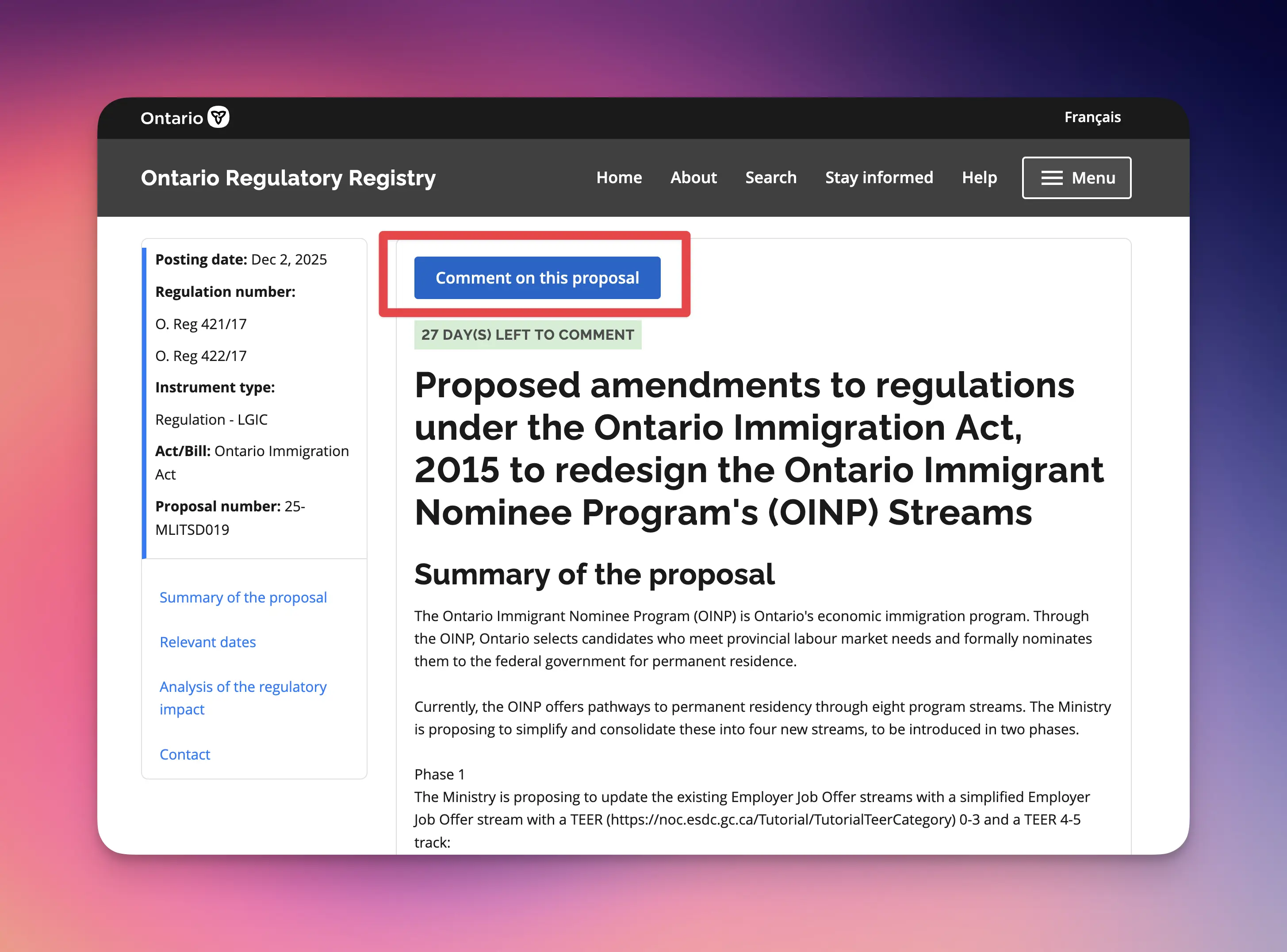
Open NotebookLM and create a new notebook.
Paste your full comment, or upload your document.
On the right side, click "Slide Deck" or "Infographic".
In a few minutes, you'll have a complete slide deck or infographic based on your content.
Infographics for reference:
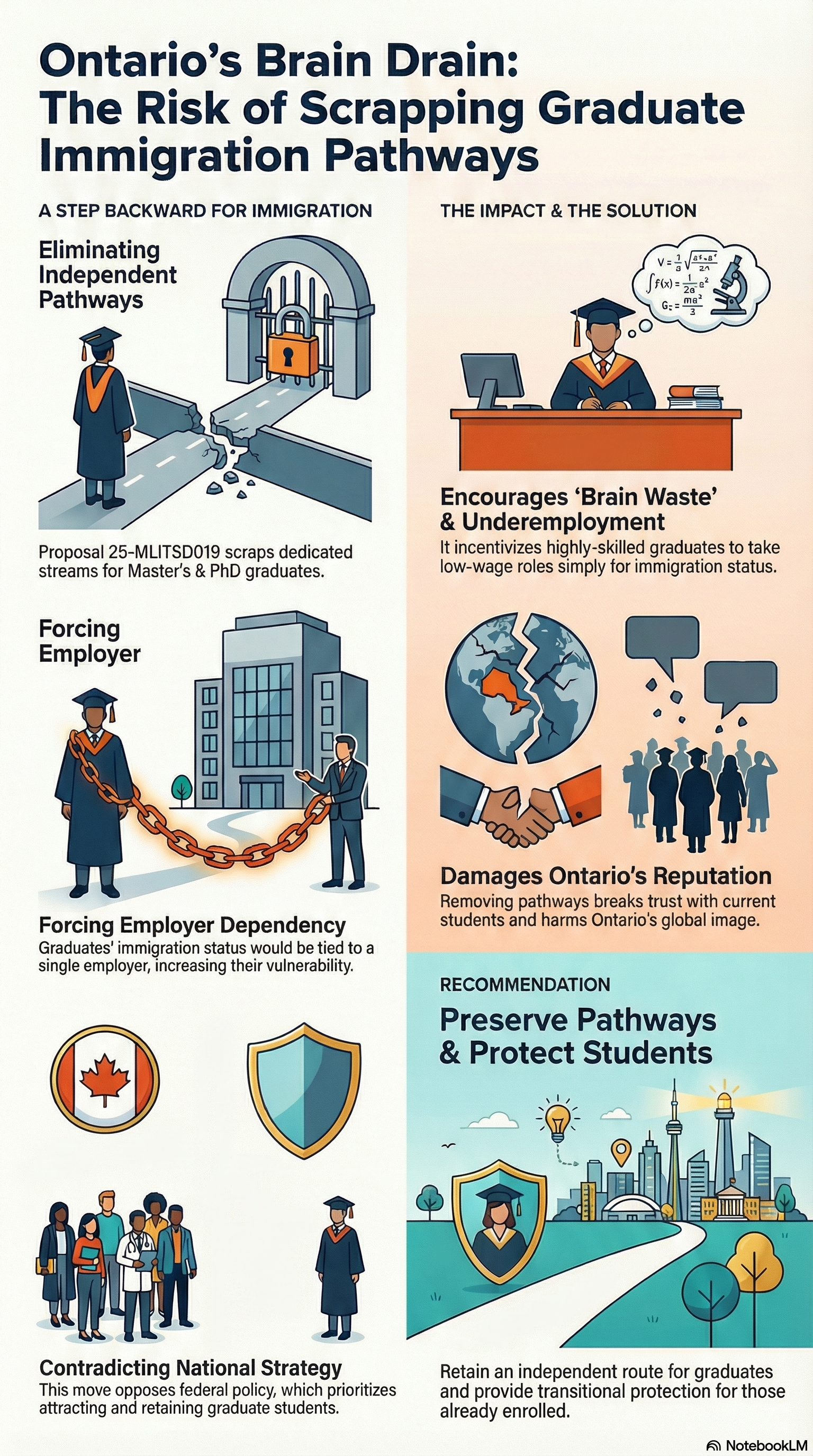
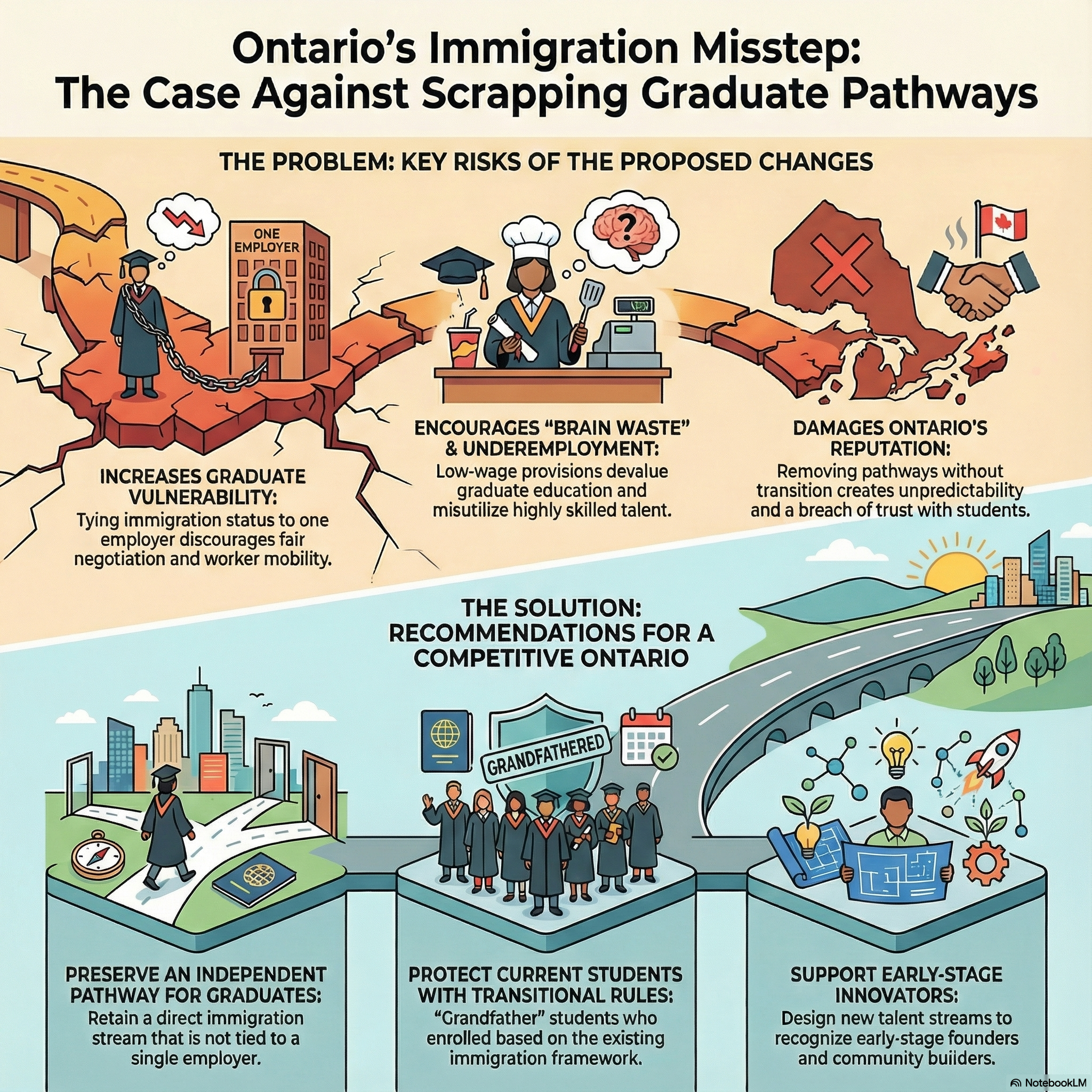
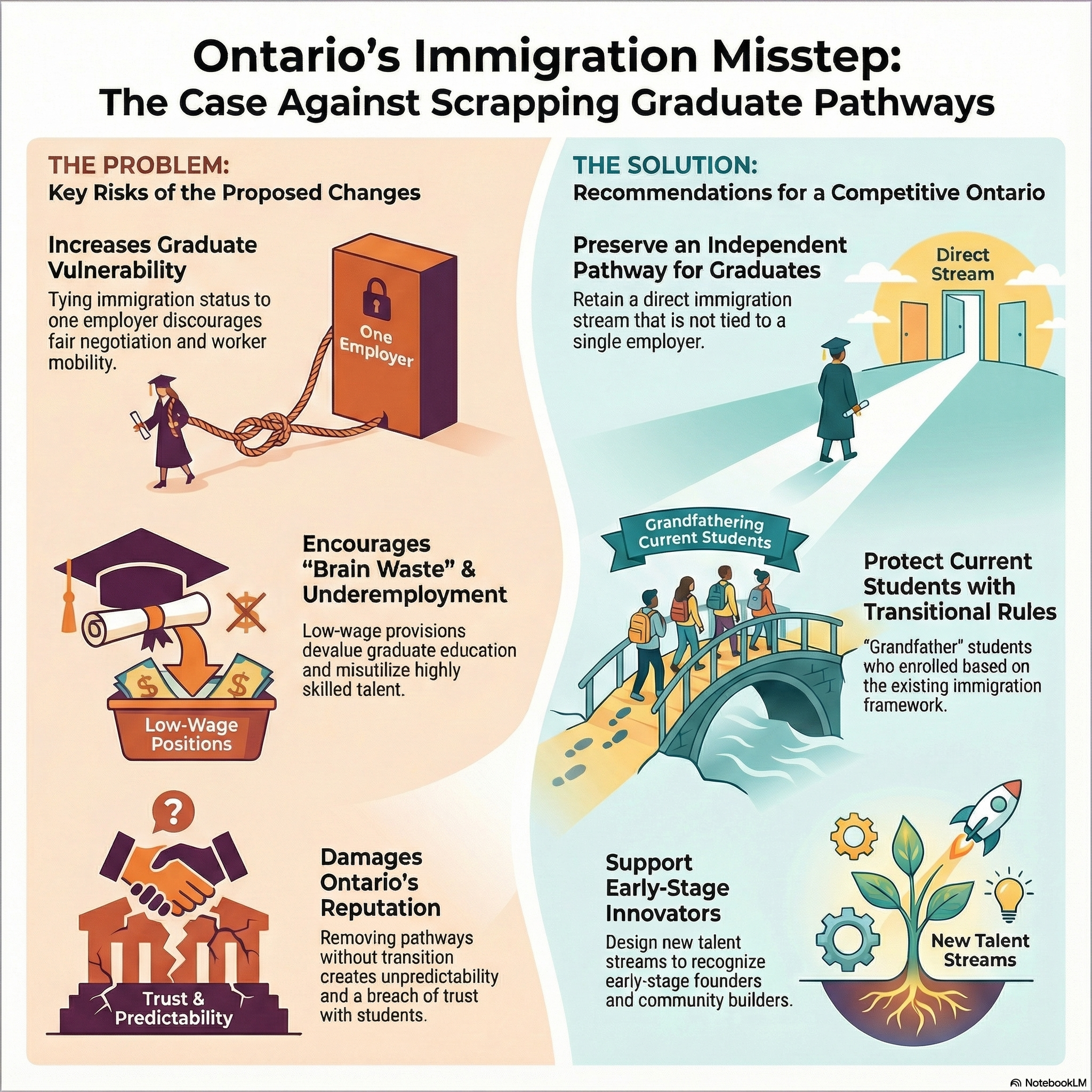
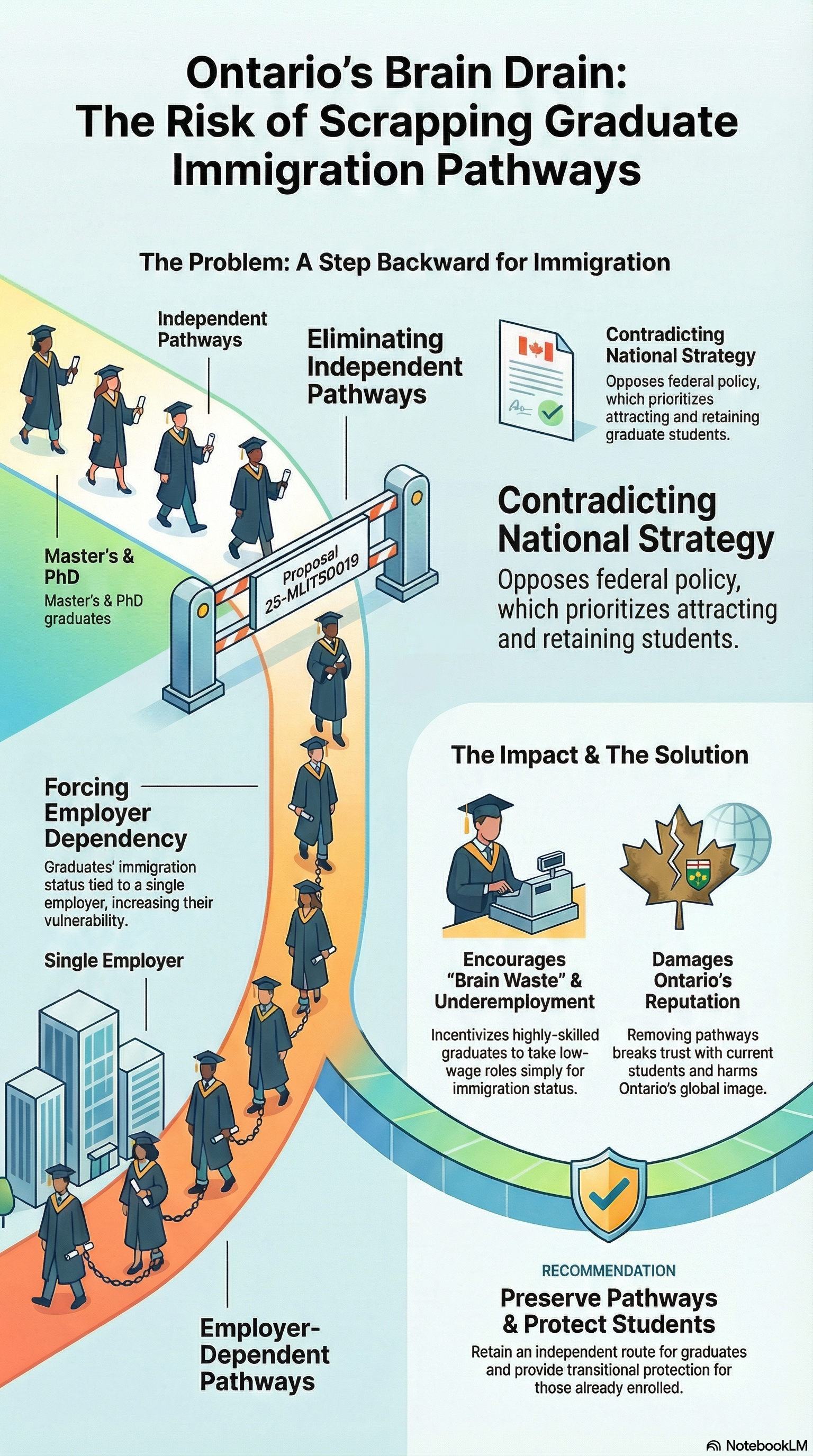
Example slide decks for reference:
Email your program and the Ministry (minister.mlitsd@ontario.ca) with a short 1–2 paragraph cover note plus your full submission pasted or attached. CC your local MPP and your university’s international office or graduate dean.
Enter your postal code to fetch your MPP, copy their email, and generate a personalized draft.
Your Local MPP
—
Subject: Urgent: OINP Changes - Proposal 25-MLITSD019
Time Remaining
Comment Template for Students
Copy, personalize, and submit to the Ontario Regulatory Registry.
How to personalize
Mention concrete examples (courses, projects, community work) to show local benefit.
Copy-ready text
You can shorten, expand, or translate this text before submitting.