One story, a bigger question
This is a 2-minute story about how Canada helped Joe become a builder, what shifted when the pathway changed, and why people already building here need fair ways to be recognized.
At a glance
Personal story.Structural question.
- Canada helped Joe Hu become a builder.
- The work is visible — a product, a company, a community.
- Then Ontario redesigned the Ontario Immigrant Nominee Program (OINP). The former graduate streams will issue no more invitations.
- Joe is one example. The question is bigger:
does Canada know how to keep builders?
Evidence and resources
Proof behind the story
What Joe built, who’s vouched for it, and the official record of what changed.
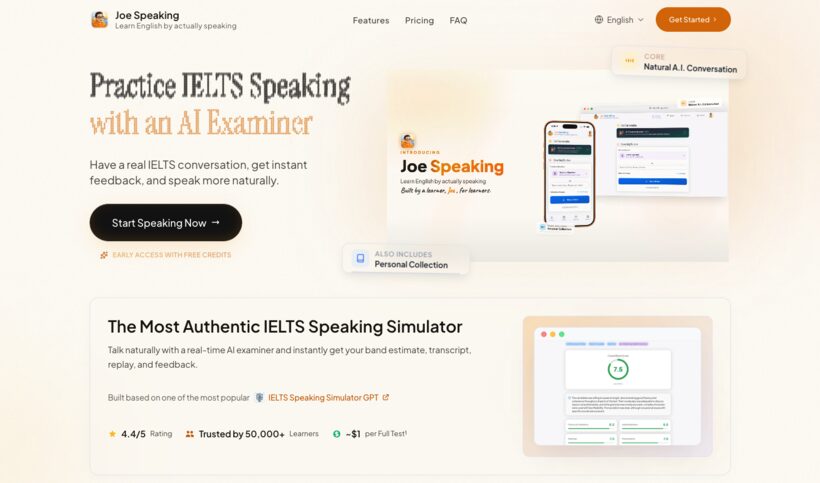 What he built
Joe Speaking
An AI speaking coach built from his own English-speaking struggle — now used by 1,200+ learners across 30+ countries.
Who noticed
YC Startup School 2026
Hand-picked for Y Combinator’s Startup School 2026 — selected from a highly competitive founder pool.
What he built
Joe Speaking
An AI speaking coach built from his own English-speaking struggle — now used by 1,200+ learners across 30+ countries.
Who noticed
YC Startup School 2026
Hand-picked for Y Combinator’s Startup School 2026 — selected from a highly competitive founder pool.
 Where it started
Joe’s Canada journey
The longer essay: leaving an old work rhythm, rebuilding confidence in Canada, and turning that space into Joe Speaking.
Where it started
Joe’s Canada journey
The longer essay: leaving an old work rhythm, rebuilding confidence in Canada, and turning that space into Joe Speaking.
The ask
Build fair pathways for people already contributing
Job offers and language scores matter. So do the products, companies, and research people build first. Some contribution shows up before the immigration system has a category for it — fair policy should protect the people caught in that gap.
-
Mid-change transition
Protect people caught mid-change
People made tuition, career, and life decisions around published graduate streams — some were already in the process. When rules change mid-stream, there should be a clear transition, not sudden uncertainty.
-
Independent graduate pathways
Keep independent graduate pathways
Masters and PhD talent should have stable routes into research, startups, teaching, and community work — without collapsing everything into one employer-defined track.
-
Ecosystem bridge
Build a better ecosystem for early talent to grow
Please invest in the ecosystem itself, so early talent can grow here: clearer routes from graduate work into startups, research, and community life. Builders come from every background, and each one makes that ecosystem stronger.
For the full policy detail, read my December 2025 feedback on Proposal 25-MLITSD019.
This page is public awareness, not immigration advice; official sources are linked where specific programs are mentioned.
Quick answers
Questions people may ask
What is this page about?
Joe Hu’s story is one example of a broader question: can Canada retain early-stage contributors it helped train while their value is still early — before the system has a way to measure it?
What changed?
Ontario redesigned the Ontario Immigrant Nominee Program (OINP). Former graduate streams will issue no more invitations, leaving some people who planned around that path in uncertainty.
What is the ask?
Joe is asking for fair transitions, independent graduate pathways, and bridges into Canada’s economy, research, and communities.
How can people help?
People can support the message, share the video with Canada's tech, startup, university, media, or policy communities, write their Ontario MPP, or add their own story if they are seeing the same pattern.
What about people who already submitted applications?
Applications submitted after an invitation under the former streams continue under the old criteria. This page is about people who had registered Expressions of Interest but had not yet received an invitation, whose registrations are being withdrawn without a clear transition.
Public signal
Help this reach people who should see the pattern
If this resonates, one click is enough. It’s not a petition — it’s a public signal that Canada’s tech, startup, university, and policy communities should pay attention to the builders already here.
No account required. We store the minimum needed to count one support signal and prevent duplicates — how we count & privacy.
Thank you — your support is counted.
supporter of fair pathways for people already building here
Now share it with someone in Canada’s tech, startup, university, media, or policy community.
Canada helped Joe become a builder · oinp.hubeiqiao.com
Take action Send a short note to your Ontario MPP Find your local MPP by postal code, then copy a short note you can make your own.
A few honest lines to the people who write the rules. You can write as a constituent whatever your immigration status. Find your MPP, then adapt the note and send it.
-
Step 1Find your MPP
Your local MPP
—
—
Lookup not working? Find your MPP on ola.org instead.
-
Step 2The note
The note
Adapt it in your own words, it lands better.
Subject: Transitional protection for people in the OINP graduate-stream process
Dear [your MPP],
I am writing as one of your constituents about the June 25 redesign of the Ontario Immigrant Nominee Program. People I know planned multi-year decisions around the published graduate pathways.
I am asking for two things. First, transitional protection, or grandfathering, for people already in the process, so registrations made in good faith are honoured rather than withdrawn. Second, keep independent graduate pathways open, so early talent can build a future here on its own merit.
These are people Ontario helped train, and I hope you will help them stay and keep contributing. One example of who this affects: oinp.hubeiqiao.com
Thank you for your time.
Sincerely,
[Your name]
[Your address or riding]
Share your story Are you seeing the same pattern? Add your story in a couple of minutes. A few concrete examples make the issue harder to ignore.
Joe is one example. If you are a student, graduate, founder, employer, professor, investor, or community member seeing the same pattern, add your story. A few concrete examples can make the issue harder to ignore.
Thank you — your story is in.
It’ll be reviewed before any public display — and your support is counted either way.